
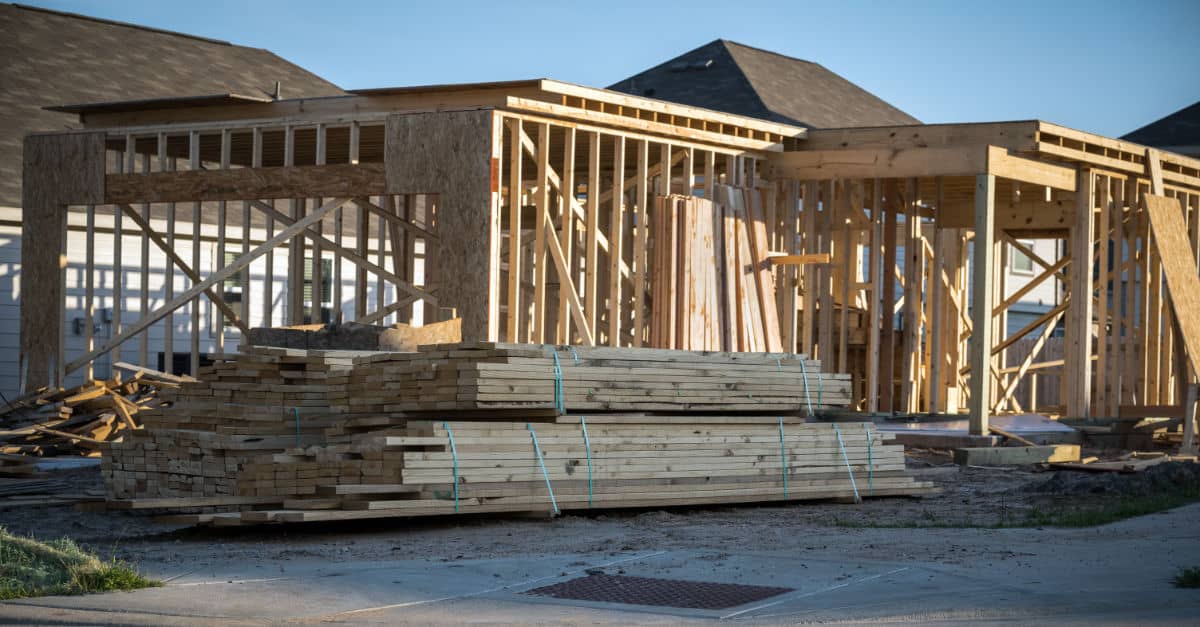

In an already difficult housing market, home builders are dealing with increasing construction material costs as well as theft.
Thieves have been on the lookout at certain building sites, according to Millie Eubanks, a sales and marketing manager with R&R Homes, since timber and other goods have become desirable commodities.
“It’s a real struggle for a contractor or a home builder or for anybody in this industry right now,” Eubanks said.
Someone broke into one of R&R Homes’ construction sites and stole $6,500 worth of Oriented Strand Board, which is used for roofing and house wrap.
In another case, someone broke into a house and took a dishwasher, but they failed to cut off the water supply. The house flooded, causing damage estimated to be between $40,000 and $50,000.
“It’s a perfect storm if you will,” said Mike Means, the Executive Officer for the Oklahoma Home Builders Association.
Due to the lumber scarcity, single-family houses in Oklahoma have increased in price by $36,000, according to a study.
The study comes as timber costs soared by 250 percent year over year in April, according to the National Association of Home Builders (NAHB).
The increase in lumber prices has increased the market value of an average new multifamily property by $13,000, resulting in families paying an extra $119 per month in rent on a new unit.
“This unprecedented price surge is hurting American home buyers and home builders and impeding housing and economic growth,” said NAHB Chairman Chuck Fowke, a custom home builder from Tampa, Fla., in a statement.
According to Steven Hatton, a distributor with 84 Lumber, a lack of employees at lumber mills is one of the reasons why timber costs are so high.
“We’re not getting lumber in a timely manner because of COVID, and the mills can’t keep up with the orders coming in,” he said. “I haven’t seen anything like this.”
The higher costs, according to the NAHB, are due to increasing demand and supply constraints caused by a shortage of local manufacturing and timber plant closures.
“A day or two before we got a call from our realtor telling us, ‘Hey, before you sign this contract, the price went up on the house,’” Willie said. “Had we chosen a bigger home to build, we obviously would not be building a home right now, because of the lovely lumber being all pricey.”
Regrettably, no one knows exactly when pricing will return to normal.
Because home building may go up and down considerably quicker than sawmill capacity, wood product prices usually fluctuate more than other commodities. Other applications of wood goods, such as non-residential construction, crates, and pallets, are more stable, although new housing is the most common, followed by house repairs and renovation, all of which are highly cyclical.
Companies that make wood products want to expand their capacity, but it takes approximately two years to construct a new mill. Many new mills were being built before the epidemic as manufacturing moved from Canada to the South.
Producers are attempting to boost the production of current mills, but most are experiencing manpower shortages. Manufacturing has been interrupted by a few Covid-19 outbreaks among production employees.
Mills also have a hard time finding new employees. Long-term trends have shifted away from blue-collar jobs, partially as a consequence of instructors persuading high school pupils that they must attend college.
Furthermore, mills are often situated in rural areas that are experiencing population loss. Finally, some people’s desire to work has been stifled by stimulus checks and unemployment insurance incentive payments.
Recent demand, according to several wood industry executives, has returned to normal, rather than being unusually high. From 1960 to 2010, annual housing starts averaged 1.5 million units, but the past decade has fallen short of that level. That logic ignores the most important source of home demand: population increase.
Prices for lumber and plywood usually increase in the spring and decrease by approximately five percent by the end of the autumn. This year, don’t expect a drop, but rather a plateau. Prices will stay high for two or three more years before returning to more typical levels. Mortgage rates will determine the rate of decrease. Meanwhile, home builders will pass on the expenses to their customers.